
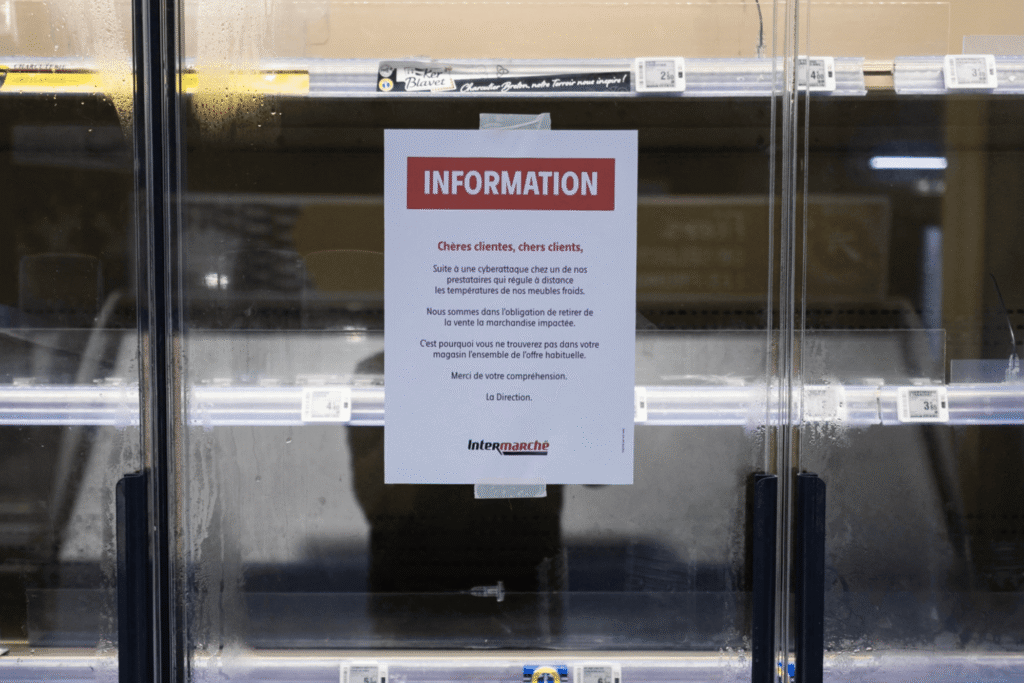
Your grocery store’s freezers, a military commissary’s cold storage and a blood bank’s fridges might share one weakness: they’re connected to the internet. U.S. agencies now say that weakness is being exploited, and the threat isn’t over.
Quick Facts
- Warning issued by: CISA, the FBI, and the Departments of Agriculture, Health and Human Services, and Transportation
- Date: Thursday, November 5, 2026
- Targets: Internet-connected refrigeration and cold chain monitoring systems
- Sectors at risk: Food and agriculture, transportation and medicine shipping
- Source: TechCrunch (reporter Zack Whittaker, November 5, 2026)
What the Government Says Is Happening
In a joint statement, federal agencies said hackers are targeting and compromising refrigeration and cold chain monitoring systems in grocery stores and cold storage facilities. Attackers can change temperatures, which could cause fire hazards, lost inventory and a shorter service life for equipment. A separate fact sheet adds that hackers may force units into constant heating and defrost cycles, causing widespread inventory loss and equipment hazards.
Where the Attacks Have Hit
The warning follows a string of incidents:
- Europe and the U.K.: Two waves of attacks hit supermarket freezers in at least a dozen countries, spoiling food and produce. Some of the affected units were remote-controlled refrigeration systems from Danish company Danfoss, which had stopped issuing security updates.
- France: A blood bank had its refrigerated units pushed to higher temperatures, but the attack was stopped before it damaged blood supplies.
- U.S. military: The Department of Defense is investigating hacks of military-run freezers, according to Reuters. The incidents were first reported by Signal and Silence.
Who’s Behind It?
The U.S. hasn’t blamed any group or government. Security researchers have broadly pointed to Iran, and U.S. officials reportedly suspect Iran is responsible too. Until authorities confirm, treat attribution as unconfirmed.
What the Agencies Want Operators to Do
CISA and its partners urge affected industries to:
- Take remote-control systems off the internet.
- Change and strengthen passwords.
- Apply patches where available.
- Retire equipment the vendor no longer supports.
CISA’s acting cybersecurity chief, Chris Butera, said any organization that relies on refrigeration and monitoring systems should assume it could be a target.
Why Cold Chains Are an Attractive Target
Food, vaccines and blood all depend on steady temperatures. A hacker doesn’t need to steal data to cause damage. Raising the thermostat on a freezer can quietly destroy thousands of dollars of product, and in medical settings, put supplies at risk. Because many of these devices are older and rarely updated, they make easy entry points.
What It Means for Consumers
Shoppers shouldn’t see unsafe products on shelves, since stores must discard spoiled goods. But supply disruptions and empty cases are possible if a retailer is hit. Operators bear the main burden of fixing the problem.
What Readers Are Asking
Which agencies issued the warning? CISA, the FBI and the Departments of Agriculture, Health and Human Services, and Transportation.
What are hackers doing? Altering temperatures and forcing freezers into heating and defrost cycles.
Who is responsible? Not officially confirmed. Researchers and reportedly U.S. officials suspect Iran.
What should businesses do first? Disconnect refrigeration controls from the open internet.
What to Watch Next
Look for formal attribution, vendor patches or guidance, and any new attacks on U.S. retailers or hospitals.
Source: TechCrunch