
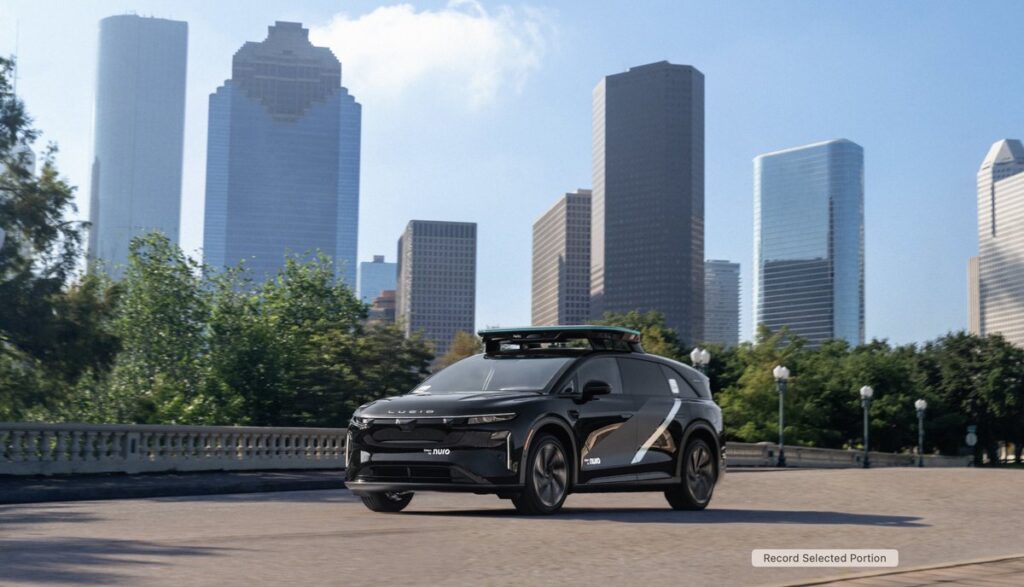
Uber is accelerating its autonomous driving ambitions with plans to launch a premium robotaxi service in Houston by mid-2027. The move marks the second U.S. city in Uber’s strategic partnership with electric vehicle manufacturer Lucid and autonomous driving technology company Nuro.
The expansion comes as the three companies prepare to debut their first commercial robotaxi fleet in the San Francisco Bay Area later this year. Together, they aim to reshape the future of ride-hailing with AI-powered, fully electric, self-driving vehicles.
Houston Becomes Uber’s Next Robotaxi Destination
After San Francisco, Houston will become the next major market where Uber deploys its next-generation autonomous ride service.
The Texas launch places Uber in direct competition with Waymo, Alphabet’s autonomous vehicle division, which already operates commercial robotaxi services in both San Francisco and Houston.
Uber says this is only the beginning. The company plans to expand its autonomous transportation network to dozens of cities over the coming years as demand for driverless mobility continues to grow.
How Uber’s Robotaxi Partnership Works
Uber’s premium robotaxi program combines the strengths of three industry leaders:
- Uber manages the ride-hailing platform, fleet operations, and customer experience.
- Lucid supplies its premium all-electric Gravity SUVs.
- Nuro provides the advanced autonomous driving software and AI technology powering the vehicles.
Rather than developing every component internally, Uber has built a collaborative ecosystem designed to scale autonomous transportation faster.
Lucid Gravity SUVs Feature Advanced Self-Driving Technology
The robotaxi fleet is built on the Lucid Gravity SUV, one of the newest luxury electric vehicles entering the autonomous mobility market.
Each vehicle includes an advanced sensor suite designed for safe navigation in complex urban environments, including:
- High-resolution cameras
- Solid-state LiDAR sensors
- Long-range radar systems
- AI-powered perception software
- Real-time environmental mapping
Together, these technologies allow the autonomous driving system to detect vehicles, pedestrians, cyclists, traffic signals, and road conditions with exceptional precision.
Driverless Testing Is Still Underway
Although testing has expanded significantly, the robotaxis are not yet operating without human supervision.
Nuro has been testing autonomous Lucid Gravity vehicles across San Francisco for several months and recently began allowing select Uber employees to request rides in the test fleet.
The company also received a California permit allowing future testing without a safety driver. However, current public road testing continues with trained safety operators behind the wheel while engineers validate system performance.
In Houston, Uber and Nuro are testing approximately 100 autonomous vehicles on public streets while also using closed-course testing facilities and advanced driving simulations to improve reliability before public deployment.
Uber Expands Houston Infrastructure Ahead of Launch
Preparing for a commercial robotaxi service requires more than autonomous vehicles.
Uber has already invested heavily in Houston by establishing a 50,000-square-foot operations hub that will support the autonomous fleet.
The facility includes:
- Vehicle maintenance operations
- Fleet management systems
- Dedicated EV charging infrastructure
- Inspection and servicing stations
- Daily robotaxi deployment support
This operational center will play a critical role in keeping autonomous vehicles charged, maintained, and ready for passengers around the clock.
Nuro’s Strategic Shift Is Paying Off
The Uber partnership represents a major milestone for Nuro.
After originally focusing on small autonomous delivery vehicles, the startup shifted its business strategy in 2024 to license its self-driving technology to automakers and mobility companies.
That decision has positioned Nuro as a leading supplier of autonomous driving software rather than a manufacturer of vehicles.
Working with Uber provides Nuro an opportunity to deploy its AI-powered autonomous platform at scale across major U.S. cities.
Lucid Gains a New Growth Opportunity
The partnership also creates significant opportunities for Lucid.
Like many electric vehicle startups, Lucid has faced challenges expanding sales in a market still largely dominated by Tesla.
Uber’s commitment offers Lucid a major commercial customer beyond traditional retail buyers.
The ride-hailing company has agreed to purchase at least 35,000 robotaxi-ready Lucid vehicles, giving the automaker a substantial boost as it scales production of its premium electric SUVs.
Uber Doubles Down on Autonomous Mobility
Uber isn’t simply partnering with autonomous vehicle companies—it is investing directly in them.
The company has reportedly invested approximately $500 million in Nuro while separately committing another $500 million to Lucid.
These investments demonstrate Uber’s long-term strategy of integrating autonomous vehicles into its global transportation platform.
Instead of building self-driving technology from scratch, Uber is leveraging partnerships with specialized companies to accelerate commercialization while reducing development risks.
What This Means for Riders
For passengers, Uber’s premium robotaxi service could introduce a new era of transportation that combines luxury electric vehicles with AI-powered autonomous driving.
Potential benefits include:
- Quiet all-electric rides
- Consistent driving performance
- Advanced onboard safety technology
- Premium cabin comfort
- Seamless app-based ride requests
- Lower long-term operating costs
Uber has also focused heavily on the in-cabin experience, ensuring passengers can easily interact with the vehicle throughout their journey.
The Future of Autonomous Ride-Hailing
Uber’s Houston expansion signals that autonomous transportation is moving from pilot programs toward commercial reality.
As AI, machine learning, sensor technology, and electric vehicles continue advancing, robotaxis are expected to become an increasingly common option in major metropolitan areas.
Competition between Uber, Waymo, and other autonomous mobility providers will likely accelerate innovation while improving accessibility and convenience for riders across the United States.
Final Thoughts
Uber’s decision to launch its premium robotaxi service in Houston by 2027 represents another major step toward the future of autonomous transportation. By combining Lucid’s luxury electric SUVs, Nuro’s cutting-edge self-driving technology, and Uber’s global ride-hailing platform, the company is building a scalable robotaxi ecosystem designed for long-term growth.
As testing expands and infrastructure develops, Houston is poised to become one of the nation’s leading cities for autonomous mobility. For consumers, the rollout offers an early glimpse into how AI-powered robotaxis could redefine daily transportation, making self-driving electric rides an increasingly familiar part of urban life. The source of this news is Tech Crunch.