
October 2026

You Can See Everything

Elizabeth Holmes Documentary ‘You Can See Everything’ Becomes a Box Office Sensation With $15 Million Opening

A new documentary about Elizabeth Holmes, the disgraced founder of blood-testing startup Theranos, is attracting enormous attention from moviegoers and Silicon Valley insiders. Titled You Can See Everything, the nearly three-hour film reportedly earned $15 million during its opening weekend in North America, according to Sunday box office estimates reported by TechCrunch. Directed by Nathan Fielder and Lance Oppenheim, the documentary offers an unusually intimate look at Holmes and her family during the month before she entered federal prison in May 2023. Its commercial success has reignited public interest in one of the most controversial stories in Silicon Valley startup history. Why Is Everyone Watching ‘You Can See Everything’? The documentary stands out because its filmmakers gained extensive access to Holmes and her family before her incarceration. Rather than simply revisiting the Theranos scandal, the movie explores the people and circumstances surrounding Holmes during a pivotal period in her life. The project also benefits from the involvement of Nathan Fielder, known for his unconventional comedy and the HBO series The Rehearsal. His distinctive approach adds an unusual dimension to the documentary, blending uncomfortable conversations with moments that challenge viewers’ expectations. Co-directed by Lance Oppenheim, the film has generated significant discussion since its surprise screening at the Telluride Film Festival. ‘You Can See Everything’ Delivers Strong Box Office Results The documentary’s opening weekend has exceeded expectations for a film of its length and limited theatrical release. According to TechCrunch, the movie earned an estimated $15 million across 855 theaters, with approximately 2,000 sold-out screenings reported during its opening weekend. The publication described the result as the second-biggest opening weekend ever for a documentary. The film also received strong critical reviews, earning reported scores of 99% on both Rotten Tomatoes and Metacritic at the time of TechCrunch’s report. These results highlight the continued audience appetite for documentaries that examine technology, corporate scandals and the people behind major business controversies. Elizabeth Holmes and the Theranos Scandal Explained Holmes founded Theranos with the promise of transforming medical testing through technology that could perform numerous blood tests using just a small sample. The startup attracted prominent investors and influential supporters before its claims came under intense scrutiny. The company ultimately collapsed amid revelations about its technology and business practices. Holmes was convicted of defrauding investors and sentenced to 11 years in prison. Although books, podcasts, television productions and previous documentaries have explored the scandal, You Can See Everything takes a different approach by focusing on Holmes’ final weeks before incarceration. Silicon Valley’s Fascination With the Documentary The film’s popularity has extended beyond traditional movie audiences. Technology professionals, startup founders and members of the Silicon Valley community have shown considerable interest in screenings and discussions surrounding the documentary. Its success also arrives as other technology-focused films struggle to attract comparable audiences. TechCrunch noted that The Social Reckoning, Aaron Sorkin’s follow-up to The Social Network, opened to $5.5 million the previous weekend, while Alex Gibney’s documentary Musk recorded a considerably smaller opening. The contrast suggests that Holmes’ story continues to capture public attention, particularly because it raises enduring questions about startup culture, investor trust and accountability in the technology industry. What the Documentary Means for Tech Startup Culture The success of You Can See Everything demonstrates how real-world technology scandals can remain relevant long after the original headlines fade. For startup founders and investors, the Theranos story remains a cautionary example of the importance of transparency, credible product claims and independent verification. With its strong opening and widespread discussion, the documentary has brought the Elizabeth Holmes story back into the spotlight while encouraging renewed debate about ambition, deception and responsibility in Silicon Valley. Source: TechCrunch

Elizabeth Holmes Documentary ‘You Can See Everything’ Becomes a Box Office Sensation With $15 Million Opening Read More »

, , , , , , , , , , , ,
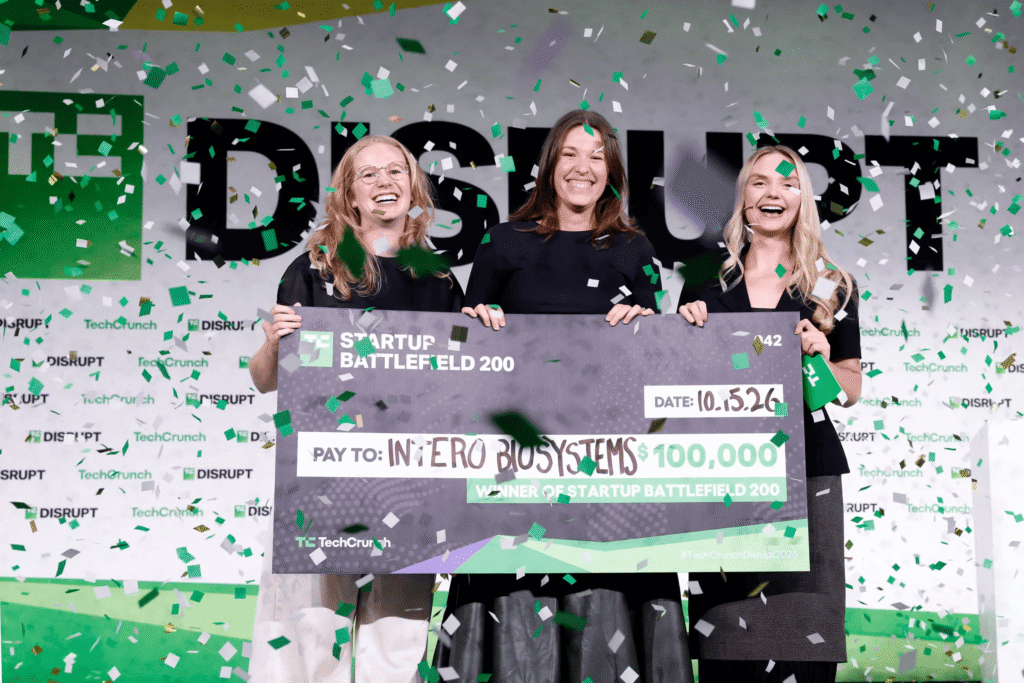
winner of Startup Battlefield at Disrupt 2026

Intero Biosystems Wins TechCrunch Disrupt 2026 Startup Battlefield, Secures $100,000 Prize

Intero Biosystems has won TechCrunch Startup Battlefield 2026, earning recognition for its innovative approach to drug testing using lab-grown human intestinal tissue. The Denver-based biotech startup emerged as the winner of the high-profile startup competition at TechCrunch Disrupt 2026 in San Francisco on October 15. Founded by Charlie Childs and Madeline Eiken, Intero Biosystems is developing technology designed to help pharmaceutical and biotechnology companies study how drugs and other compounds affect the human body before testing them in people. The win puts the early-stage company in the spotlight as investors increasingly look toward biotechnology, life sciences and technologies that could transform drug development. <Cite refs={[“turn645196news0″,”turn645196news1”]}/> What Is Intero Biosystems? Intero Biosystems is building miniature human intestinal organoids, which are lab-grown tissues designed to mimic important characteristics of the human gut. Its flagship product, GastroScreen, allows pharmaceutical, biotech, food and chemical companies to evaluate how different compounds interact with intestinal tissue. Each organoid measures approximately one millimeter across. Unlike simpler laboratory models that reproduce only parts of the intestine, Intero’s approach incorporates multiple cell and tissue types found in the human gut. The technology could give researchers another tool for studying drug responses and evaluating compounds during early-stage development. It may also help address some limitations of traditional testing methods, although its effectiveness depends on the specific application and further validation. Why Did Intero Biosystems Win Startup Battlefield 2026? TechCrunch Disrupt’s Startup Battlefield brings promising early-stage companies before investors, industry experts and technology leaders. This year’s competition featured 20 startups selected from the broader Startup Battlefield 200 program. After live demonstrations and judging, five finalists advanced to the final round: Intero Biosystems, Apate, Flox Intelligence, Industrial Next and Satlyt. Intero ultimately claimed the Startup Battlefield Cup and the $100,000 equity-free prize, giving the company both financial support and visibility among the startup and venture capital communities. <Cite refs={[“turn645196news0″,”turn645196search10”]}/> The competition highlights how emerging companies are tackling problems across healthcare, cybersecurity, industrial automation and space technology. How Human Organoids Could Change Drug Development Drug developers often rely on laboratory experiments and animal models to evaluate potential treatments. However, biological differences between animals and humans can make it difficult to predict how a drug will behave in people. Human intestinal organoids offer an additional research model that more closely reflects aspects of human biology. Intero’s GastroScreen platform aims to help researchers examine how compounds affect intestinal tissue before advancing their development. Such models could support early research, help identify potential problems and provide additional information when evaluating candidate drugs. However, organoids are not complete replacements for clinical trials or every existing testing method. Researchers must assess each model’s reliability and suitability for its intended use. What the Win Means for the Biotech Startup Winning Startup Battlefield gives Intero Biosystems a prominent platform to introduce its technology to potential investors, customers and industry partners. The company spun out of the University of Michigan, combining scientific research with a commercial product aimed at pharmaceutical and other industries. Its victory also reflects growing interest in technologies that make drug development more human-relevant and potentially reduce dependence on animal testing where validated alternatives are appropriate. For the broader startup ecosystem, Intero’s success demonstrates how scientific innovation can become a commercial opportunity when founders address a clear industry challenge. The bottom line: Intero Biosystems’ Startup Battlefield 2026 victory puts its human intestinal organoid technology on the map. Its next challenge will be demonstrating the value of GastroScreen in real-world research and expanding adoption among pharmaceutical and biotechnology customers.Source: TechCrunch

Intero Biosystems Wins TechCrunch Disrupt 2026 Startup Battlefield, Secures $100,000 Prize Read More »

, , , , , , , , , , , ,
Flock CEO defends surveillance technology

Flock CEO Defends AI Surveillance Technology Amid Growing Privacy Backlash: “We Shouldn’t Pause Progress”

Flock Safety CEO Garrett Langley is defending the company’s surveillance technology as growing public opposition raises questions about privacy, artificial intelligence, and the expanding use of automated license plate readers across the United States. In an October 14, 2026, report, TechCrunch highlighted Langley’s response to the mounting criticism, including concerns about how surveillance systems collect and share data. His position centers on the argument that technological progress should continue despite the controversy surrounding its use. The debate puts Flock Safety at the center of a broader national discussion about public safety, digital privacy, and the limits of surveillance technology. Why Flock Safety Is Facing Growing Backlash Flock Safety develops surveillance systems used by law enforcement agencies, businesses, and communities. Its technology includes automated license plate readers that capture vehicle information and help investigators search for vehicles connected to reported crimes. Supporters argue these systems can help police investigate thefts, identify suspect vehicles, and respond to public safety incidents more efficiently. However, critics question how extensively authorities should track vehicle movements and what safeguards protect information collected by these networks. Privacy advocates have also raised concerns about data retention, access controls, information sharing between agencies, and the potential for surveillance tools to be used beyond their original purpose. These concerns have fueled public scrutiny of Flock Safety and other companies developing AI-powered surveillance products. Flock CEO Says Surveillance Technology Should Keep Advancing Speaking at TechCrunch Disrupt 2026 in San Francisco, Langley argued that surveillance technology can improve accountability by helping law enforcement identify vehicles connected to criminal investigations. His remarks reflected the company’s position that the potential public safety benefits justify continued technological development. However, during the discussion, he faced questions about the criticism directed at Flock and the real-world risks associated with its products. Privacy Concerns and Contract Cancellations Put Pressure on Flock The backlash has had practical consequences for the company. Some communities have reconsidered or cancelled their contracts, while concerns about improper access to surveillance databases have intensified scrutiny of Flock’s operations. Critics argue that automated license plate readers can create detailed records of people’s movements, including those of individuals who have not been accused of any crime. They want stronger restrictions on data access, retention, and sharing. Supporters, meanwhile, point to the potential for these systems to help investigators locate stolen vehicles and develop leads in criminal cases. The central challenge is determining how to preserve those benefits while protecting civil liberties. The Future of AI Surveillance in the United States The debate surrounding Flock Safety highlights a wider technology industry challenge: innovation must contend with public trust, privacy rights, and accountability. As AI-powered cameras and connected surveillance networks become more widespread, communities are likely to continue examining who can access collected data, how long it remains stored, and what oversight prevents misuse. For Flock, Langley’s message is clear: technological progress should continue. Whether that position reassures communities will depend in part on how effectively the company and its customers address concerns about surveillance and data protection.Source: TechCrunch.

Flock CEO Defends AI Surveillance Technology Amid Growing Privacy Backlash: “We Shouldn’t Pause Progress” Read More »

, , , , , , , , , , ,
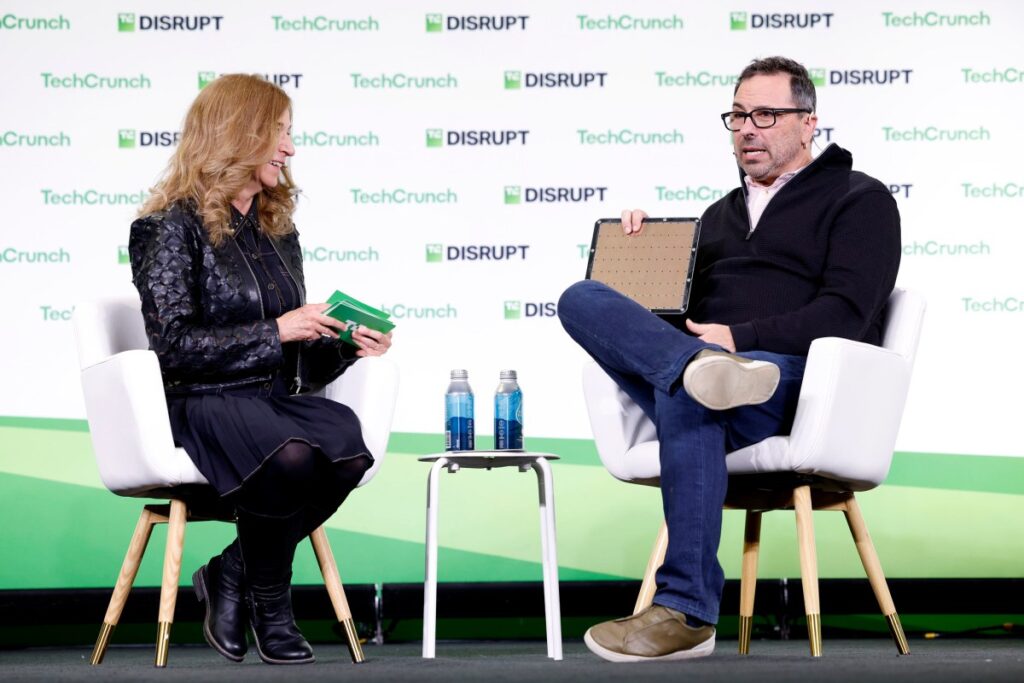
Cerebras CEO says

Cerebras CEO Predicts a Future Where Every Home Has a Personal AI Assistant

Artificial intelligence could soon become a permanent fixture in American households, much like smartphones and smart speakers today. Cerebras CEO Andrew Feldman believes the world is approaching a future where people have their own personal AI assistants at home, capable of helping with everyday tasks and responding to individual needs. The prediction highlights how rapidly AI technology is evolving beyond chatbots and workplace productivity tools. As AI models become more capable and computing infrastructure advances, personalized AI assistants could change how people manage their homes, organize their schedules, and interact with digital services. According to a report published by TechCrunch on October 13, 2026, Feldman’s comments reflect growing expectations that AI will become more accessible and integrated into daily life. Why Personal AI Assistants Could Become Common Today’s AI assistants can answer questions, summarize documents, draft emails, and help users plan their days. Future systems could go further by learning individual preferences, coordinating tasks, and offering assistance across different devices and applications. For example, a home-based AI assistant could help a family organize appointments, manage shopping lists, control compatible smart-home devices, and find information without requiring users to open multiple apps. More advanced assistants could also provide personalized support based on a user’s routines and preferences. However, these capabilities will depend on improvements in AI reasoning, reliability, privacy protections, and integration with everyday technology. Feldman’s outlook points toward a shift from AI as a tool people actively open to AI as a more continuous digital companion. What Cerebras Brings to the AI Industry Cerebras Systems develops specialized computing hardware designed to accelerate artificial intelligence workloads. The company is known for its wafer-scale engine technology, which uses an unusually large processor design to support demanding AI computations. Powerful computing infrastructure matters because advanced AI models require substantial processing resources to train and operate. Faster inference—the process through which an AI model generates responses—can make digital assistants feel more responsive and practical. If computing becomes faster and more accessible, developers may find it easier to deliver AI services to more people and support increasingly complex interactions. Nevertheless, the availability of powerful chips alone will not guarantee widespread adoption. Cost, energy consumption, software quality, and consumer trust will also influence how quickly personal AI assistants reach households. Will AI Assistants Transform Smart Homes? The smart-home market already includes voice assistants, connected appliances, security cameras, and automated lighting. AI could bring these separate systems closer together by allowing users to communicate their needs naturally rather than relying on fixed commands. Imagine asking an assistant to prepare a daily schedule, remind family members about upcoming appointments, or coordinate compatible home devices. Instead of simply following isolated instructions, future systems could potentially understand context and manage several related tasks. For American consumers, this could make home automation more useful and accessible. It could also create opportunities for technology companies developing AI software, personal computing devices, and connected-home products. However, companies must address important concerns, including the handling of sensitive household information, unauthorized access, and the risk of AI systems making mistakes. Privacy and Trust Will Shape the Future of Home AI An AI assistant that operates throughout the day could process personal conversations, schedules, preferences, and other sensitive information. Consumers will therefore need clear controls over what their assistants collect, store, and share. On-device processing, transparent privacy settings, strong security, and user-controlled permissions could help address these concerns. Developers will also need to make it easy for people to review or delete stored information. What Comes Next for Personal AI? Cerebras CEO Andrew Feldman’s vision reflects a broader industry push toward more personalized and capable AI systems. While the timeline and form of widespread home adoption remain uncertain, advances in computing and AI software are creating new possibilities. The next phase of AI may not be defined only by smarter chatbots. It could also involve assistants that help people manage everyday life across their homes, devices, and digital services. Whether every household eventually has a personal AI assistant will depend on affordability, reliability, privacy, and genuine consumer demand. For now, the idea signals an important direction for the future of artificial intelligence.Source: [TechCrunch

Cerebras CEO Predicts a Future Where Every Home Has a Personal AI Assistant Read More »

, , , , , , , , ,