
Editor Choice

beepinsider-com

Travis Kalanick’s Atoms Raises $1.7 Billion to Build the Future of AI Robotics and Industrial Automation

Travis Kalanick is making one of the biggest comeback moves in the technology industry. His robotics and industrial automation startup, Atoms, has secured an impressive $1.7 billion funding round led by Andreessen Horowitz (a16z), signaling strong investor confidence in the future of AI-powered robotics and intelligent manufacturing. The funding round also attracted major investors, including Bain Capital, Fifth Wall, and notably Uber—the very company Kalanick co-founded and later exited as CEO in 2017. The investment reunites Kalanick with Uber nearly a decade after his departure and marks a significant chapter in his vision to transform the physical economy using artificial intelligence and robotics. A $1.7 Billion Bet on the Future of Robotics The latest funding positions Atoms among the best-funded robotics startups in the world. Alongside the investment, Ben Horowitz, co-founder of Andreessen Horowitz, will join Atoms’ board of directors, strengthening the partnership between the venture capital giant and Kalanick’s ambitious new venture. The investment reflects growing confidence that AI, robotics, autonomous systems, and industrial automation will become the next major wave of technological innovation, following the rise of cloud computing and generative AI. Rather than focusing on consumer robots, Atoms is targeting large industrial sectors where automation can significantly improve productivity. What Is Atoms? Atoms is the rebranded holding company built around projects Travis Kalanick has developed since leaving Uber. The company evolved from CloudKitchens, Kalanick’s ghost kitchen business that sought to modernize food delivery infrastructure. Earlier this year, he expanded the vision by acquiring Pronto, an autonomous heavy-industry automation company founded by former Uber executive Anthony Levandowski. With this acquisition, Atoms shifted its focus toward robotics, autonomous vehicles, industrial software, and AI-powered automation across multiple industries. The company aims to create intelligent systems capable of transforming how physical work is performed. A Vision Beyond Software Kalanick describes Atoms as the next step in a long-term mission to digitize the physical world. Instead of building software exclusively for digital environments, Atoms seeks to combine artificial intelligence, robotics, automation, transportation, manufacturing, and infrastructure into a unified technology platform. According to Kalanick, the company wants to build what he calls “atoms-based computers,” where manufacturing functions as computing power, real estate becomes storage infrastructure, and transportation serves as the network connecting everything together. The concept represents an ambitious attempt to bring software intelligence into real-world industrial operations. Building the “Wheelbase for Robots” Although Atoms has revealed few technical details about upcoming products, Kalanick has previously described his goal as creating a “wheelbase for robots.” Rather than designing a single robot, the company appears focused on building foundational robotic infrastructure that can support multiple industries. Potential applications may include: By developing core robotics platforms instead of isolated products, Atoms could enable faster deployment of AI-powered machines across large industrial markets. Mining Could Be a Major Opportunity Mining has emerged as one of Atoms’ most promising areas of interest. Following the acquisition of Pronto, which specializes in autonomous technology for heavy industrial vehicles, Kalanick has indicated that expanding into mining automation is a key strategic objective. Mining companies increasingly rely on AI, autonomous trucks, predictive maintenance, and intelligent fleet management to improve productivity while reducing operational costs. If successful, Atoms could become a major technology provider for one of the world’s largest industrial sectors. Uber Reconnects With Its Former Founder One of the most surprising aspects of the funding round is Uber’s participation. The investment reunites Travis Kalanick with the ride-hailing company he founded after a highly publicized leadership departure in 2017. While Uber’s investment represents only one portion of the broader financing round, it highlights how strategic partnerships can evolve as the technology landscape changes. The renewed relationship also demonstrates growing confidence in Kalanick’s ability to lead ambitious innovation projects beyond transportation. Why Andreessen Horowitz Is Backing Atoms Andreessen Horowitz has consistently invested in companies driving major technological shifts, from cloud computing to artificial intelligence. The venture firm’s leadership believes robotics could become the next transformative industry. Ben Horowitz praised Kalanick’s ability to combine software engineering with complex industrial systems, arguing that improving productivity across physical industries could become one of AI’s most valuable applications. Instead of replacing workers, the goal is to enhance efficiency by allowing intelligent machines to perform repetitive, hazardous, and resource-intensive tasks. Funding Will Support Talent and Expansion Although Atoms has not disclosed a detailed spending roadmap, Kalanick suggested that much of the new capital will be used to recruit top engineering talent. Developing advanced robotics platforms requires expertise across multiple disciplines, including: Building world-class teams will likely be essential as Atoms pursues increasingly complex industrial technologies. Why This Matters for the AI Industry Artificial intelligence is rapidly expanding beyond chatbots and digital productivity tools into real-world industrial environments. Companies are now investing heavily in physical AI, where intelligent software powers robots, autonomous vehicles, manufacturing equipment, warehouses, and infrastructure. Atoms represents this next evolution by combining AI with robotics to improve productivity across sectors that have historically relied on manual labor and legacy machinery. As industries embrace automation, startups capable of connecting software intelligence with physical operations could play a defining role in the future of global manufacturing and industrial technology. Final Thoughts The $1.7 billion funding round gives Atoms substantial resources to pursue one of the technology industry’s most ambitious visions—bringing AI, robotics, autonomous systems, and industrial automation together on a massive scale. Backed by Andreessen Horowitz, Uber, Bain Capital, and other leading investors, Travis Kalanick is positioning Atoms to tackle some of the world’s most complex industrial challenges. While the company has yet to unveil its full product roadmap, this investment underscores growing confidence that the next major AI revolution won’t happen only on computer screens—it will reshape factories, transportation networks, construction sites, and industrial operations across the physical world. The Source of this news is Tech Crunch.

Travis Kalanick’s Atoms Raises $1.7 Billion to Build the Future of AI Robotics and Industrial Automation Read More »

, , , , , , , , , ,
beepinsider-com

Cascade Raises $3.5 Million to Transform Construction Bidding With AI-Powered Project Discovery

The U.S. construction industry is embracing artificial intelligence at a rapid pace, and one startup is aiming to simplify one of its biggest challenges—finding the right projects. Cascade, an AI-powered construction technology startup, has secured $3.5 million in seed funding to help architecture, engineering, and construction (AEC) firms discover, predict, and win more contracts across the United States. The funding round was led by Andreessen Horowitz Speedrun, with participation from Ada Ventures and Snowball VC. The investment will help Cascade expand its AI platform, grow its engineering team, and accelerate its presence in the competitive U.S. construction technology market. Why Finding Construction Projects Is Still a Major Challenge For many construction companies, securing new work remains a complex and time-consuming process. Contractors often spend countless hours searching through separate procurement portals managed by federal agencies, state governments, counties, municipalities, and private organizations. Instead of focusing on building projects, many firms struggle with fragmented data, manual research, and unpredictable bidding opportunities. Cascade aims to eliminate these inefficiencies by bringing all relevant project information into a single AI-powered platform that identifies the most promising opportunities before competitors do. The Inspiration Behind Cascade Founded in 2025 by Hannia Zia and Joana Ferreira, Cascade was inspired by the founders’ personal experiences with the construction industry. Ferreira saw family members working closely with construction businesses that struggled to attract consistent projects despite delivering excellent work. Similarly, Zia watched her father attempt to build a construction business in Pakistan but fail to secure enough contracts to maintain long-term growth. These experiences highlighted a widespread industry problem: skilled builders often lack access to modern business development tools. Rather than improving construction itself, Cascade focuses on helping companies win more business. How Cascade’s AI Platform Works Cascade combines artificial intelligence, predictive analytics, procurement data, and historical bidding information to identify projects that best match a company’s expertise. After signing up, customers provide information about their specialties, experience, and capabilities. The AI then analyzes thousands of public and private data sources across the United States to recommend projects with the highest probability of success. The platform continuously monitors: Instead of simply listing available bids, Cascade predicts which developers are most likely to win major contracts based on historical tender data. For example, if a state announces a new $100 million affordable housing grant, Cascade studies previous award patterns and identifies developers most likely to receive funding. Construction firms can then begin building relationships with those developers long before projects officially enter the bidding phase. This predictive approach gives contractors a valuable competitive advantage. AI Learns From Every Successful Bid One of Cascade’s biggest differentiators is its feedback-driven machine learning system. Whenever a customer successfully wins a project, that information is fed back into the platform. This allows the AI model to continuously improve its recommendations, recognize new market trends, and refine future project predictions. Over time, the platform becomes smarter at identifying high-value leads and matching firms with contracts that align with their capabilities. This continuous learning model positions Cascade as a next-generation construction intelligence platform rather than just another project database. Early Success With Major Construction Companies Cascade has already attracted impressive customers despite being a young startup. The company says firms involved in constructing major infrastructure and commercial developments—including JFK Airport, LaGuardia Airport, Four Seasons Hotels, and multiple data centers—are already using its platform. The founders credit participation in Andreessen Horowitz’s Speedrun accelerator for helping them gain credibility within the industry and close enterprise-level contracts. The accelerator also provided valuable exposure, mentorship, and networking opportunities that accelerated the startup’s early growth. Funding Will Accelerate Expansion The newly raised $3.5 million will support several growth initiatives. Cascade plans to: The investment reflects growing confidence in AI-powered software designed specifically for the construction sector. Competing in the Construction Technology Market Cascade enters a market that already includes established platforms such as GovWin IQ and ConstructConnect. However, the founders believe their biggest competitive advantage is an AI-first architecture built specifically for predictive opportunity discovery instead of traditional project listings. Rather than requiring contractors to manually search thousands of listings, Cascade proactively recommends the projects, developers, and opportunities most relevant to each business. As artificial intelligence becomes more integrated into procurement, estimating, project management, and forecasting, predictive platforms like Cascade could become essential tools for construction firms. Why This Matters for the Future of Construction The construction industry is undergoing rapid digital transformation. Companies increasingly rely on AI, automation, data analytics, and predictive intelligence to improve efficiency and increase revenue. Cascade addresses one of the industry’s most overlooked challenges—business development. By helping firms discover opportunities earlier, identify likely project winners, and prioritize high-probability bids, the platform has the potential to reduce wasted effort while improving contract success rates. As more procurement data becomes digitized and AI models continue learning from customer outcomes, predictive bidding platforms could fundamentally reshape how construction companies compete for work. Final Thoughts Cascade’s $3.5 million seed funding marks another significant milestone in the growing AI construction technology sector. By combining predictive analytics, procurement intelligence, and machine learning, the startup is helping construction firms spend less time searching for projects and more time building them. With backing from leading venture capital firms and early adoption by major construction companies, Cascade is positioning itself as an innovative player in the future of AI-powered construction bidding, project discovery, and construction business development across the United States. The Source of this news is Tech Crunch.

Cascade Raises $3.5 Million to Transform Construction Bidding With AI-Powered Project Discovery Read More »

, , , , , , , , , ,
beepinsider-com

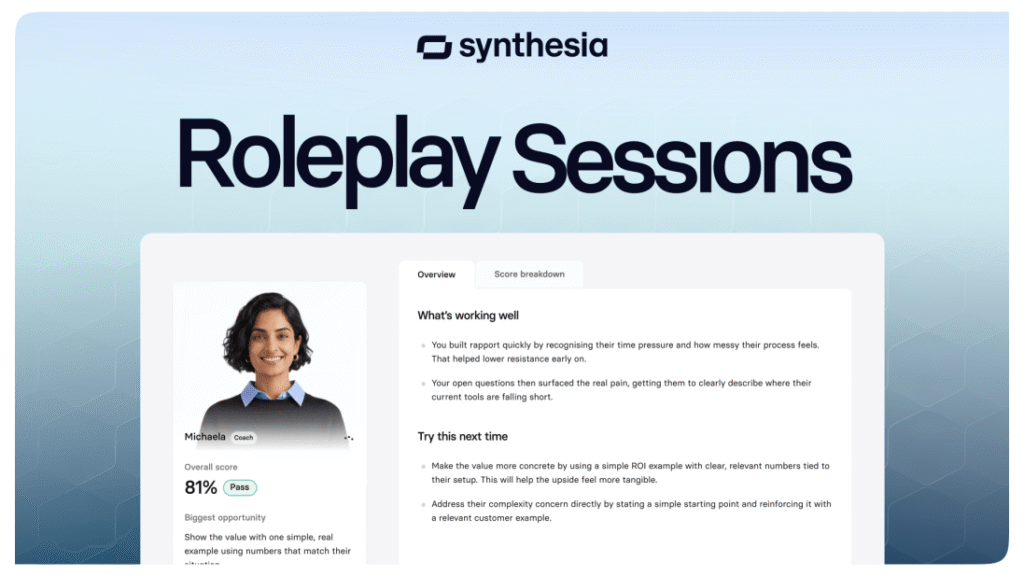
Synthesia Unveils AI Roleplay Sessions to Transform Corporate Training With Live Coaching and Performance Analytics

Artificial intelligence is reshaping workplace learning, and Synthesia is taking its enterprise AI platform beyond video creation. The British AI startup has launched Roleplay Sessions, an interactive training solution that allows employees to practice real-world business conversations with AI-powered avatars that respond, challenge, and evaluate their performance. The move marks a major shift from AI-generated training videos to AI-powered live coaching, helping businesses measure employee development instead of simply delivering educational content. As organizations seek measurable returns on AI investments, Synthesia is positioning itself as a next-generation enterprise training and performance management platform. Synthesia Expands Beyond AI Training Videos Synthesia built its reputation by enabling companies to create professional AI-generated training videos quickly and cost-effectively. Enterprises worldwide use its platform to develop onboarding materials, compliance courses, and internal learning programs without expensive production teams. Now, the company is introducing Roleplay Sessions, the first product in its broader Sessions platform, designed to create interactive learning experiences where employees actively practice workplace scenarios instead of passively watching videos. Future updates are expected to expand the platform into job interview preparation, candidate screening, and additional workforce training solutions. What Is Synthesia Roleplay Sessions? Roleplay Sessions enables employees to engage in realistic conversations with AI avatars that simulate challenging workplace interactions. Instead of watching instructional videos, users participate in live scenarios such as: The AI avatar responds naturally, asks follow-up questions, presents objections, and evaluates employee performance using customized scoring rubrics. This creates an immersive learning experience that mirrors real business situations while providing immediate, actionable feedback. Why Interactive AI Coaching Matters Traditional corporate training often focuses on sharing information, but knowledge alone doesn’t always improve workplace performance. Synthesia believes employees develop stronger skills by practicing real conversations and receiving personalized coaching. This approach aligns with modern learning research, which emphasizes active participation and continuous feedback as key drivers of long-term skill development. By combining AI coaching, conversation simulation, and performance analytics, companies gain greater visibility into employee progress while helping teams build confidence in high-pressure situations. A New Direction for Enterprise AI Roleplay Sessions also reflects a broader trend in enterprise artificial intelligence. Rather than focusing solely on content generation, businesses increasingly want AI solutions that deliver measurable business outcomes. Synthesia uses its proprietary avatar and voice technology while integrating advanced AI reasoning capabilities to power dynamic conversations. The platform adds value through customized evaluation frameworks, analytics dashboards, and employee performance tracking. This transforms the platform from a simple AI video generator into a comprehensive learning and talent development solution. Performance Analytics Give Managers Better Insights One of the biggest advantages of Roleplay Sessions is its ability to generate detailed workforce insights. Managers can monitor how employees perform across multiple training sessions and identify patterns within departments or entire organizations. Performance analytics may help businesses: Instead of relying on subjective observations, organizations receive structured data that can guide future training decisions. Early Enterprise Adoption Shows Strong Demand Synthesia reports that several major global organizations have already adopted Roleplay Sessions for large-scale deployments. According to the company, early customers include: These early implementations primarily focus on sales enablement and leadership coaching, two areas where communication skills directly impact business performance. Flexible AI Training for Modern Businesses Organizations can build customized training programs within the Synthesia platform or collaborate with Synthesia’s consultants to create tailored learning experiences. The AI can incorporate existing company resources, including: This enables businesses to create personalized coaching experiences aligned with their own processes and organizational culture. Expanding Beyond Large Enterprises Although Roleplay Sessions currently targets enterprise customers, Synthesia plans to make the platform available to small businesses, professionals, and educational institutions in the near future. As AI computing costs continue to decline, interactive coaching tools are expected to become more affordable and accessible across different industries. This expansion could significantly broaden the adoption of AI-powered learning and workforce development solutions. Why AI Roleplay Could Shape the Future of Workplace Learning Businesses are under growing pressure to maximize productivity while preparing employees for increasingly complex customer interactions. Interactive AI coaching offers several advantages over traditional training methods: As organizations continue investing in digital transformation, AI-powered roleplay platforms may become a core component of corporate learning strategies. The Bottom Line Synthesia’s launch of Roleplay Sessions represents an important evolution in enterprise AI. Rather than simply creating training content, the company is helping businesses measure how effectively employees apply what they learn. By combining AI avatars, live conversation practice, performance scoring, and workforce analytics, Synthesia is addressing one of the biggest challenges in corporate training—turning knowledge into measurable workplace performance. As enterprise AI continues to mature, platforms that demonstrate real business impact are likely to play a central role in the future of employee development, leadership training, and organizational success. The Source of this news is Tech Crunch.

Synthesia Unveils AI Roleplay Sessions to Transform Corporate Training With Live Coaching and Performance Analytics Read More »

, , , , , , , ,
fora-beepinsider

AI Travel Startup Fora Becomes a Unicorn After $60M Funding Round, Betting Big on Human-Powered Travel Planning

The travel technology industry is embracing artificial intelligence at an unprecedented pace, and Fora has emerged as one of its fastest-growing success stories. The AI-powered travel agency has officially achieved unicorn status after raising $60 million in Series D funding, pushing its valuation to $1 billion. Rather than replacing travel advisors with AI, Fora is taking a different approach. The company is using artificial intelligence to automate repetitive tasks while empowering human travel experts to deliver more personalized experiences. This hybrid model is rapidly gaining traction as travelers increasingly seek customized vacations backed by real human expertise. Fora Secures $60 Million in Series D Funding Founded in 2021, Fora announced a $60 million Series D investment led by Forerunner and Tactile Ventures. Existing investors, including Insight Partners and Thrive Capital, also participated in the funding round, highlighting continued confidence in the company’s long-term vision. With this latest investment, Fora has now raised approximately $138.5 million since its launch, positioning itself among the fastest-growing travel technology startups in the United States. The funding marks a major milestone as the company joins the growing list of AI-powered unicorn startups transforming traditional industries. How Fora Is Transforming the Travel Industry Fora operates as a modern travel platform that connects travelers with professional travel advisors while making it easier for individuals to launch careers as independent travel agents. The platform provides advisors with digital tools to manage customer communication, build travel itineraries, coordinate bookings, and organize vacation planning from one centralized workspace. Travelers can also browse experienced advisors who specialize in destinations ranging from tropical beach vacations and luxury honeymoons to family holidays, cruises, and international adventures. This technology-driven marketplace creates value for both travel professionals and customers seeking customized travel experiences. AI Assistant ‘Via’ Helps Advisors Work Smarter A major portion of the new investment will support the expansion of Via, Fora’s AI-powered assistant designed specifically for travel advisors. Instead of replacing human expertise, Via automates time-consuming administrative work, including: By handling repetitive tasks, the AI assistant allows advisors to spend more time building relationships with clients, understanding traveler preferences, and delivering highly personalized recommendations. This human-plus-AI strategy reflects a growing trend across multiple industries where artificial intelligence enhances productivity rather than eliminating professional roles. Human Expertise Remains the Competitive Advantage Despite rapid advancements in generative AI, Fora believes travelers still value human guidance when planning important vacations. Complex trips often involve multiple destinations, changing travel requirements, family preferences, special celebrations, and personalized recommendations that AI alone cannot fully manage. By combining automation with experienced travel advisors, Fora aims to deliver faster service without sacrificing the personal touch that many travelers expect. This balanced approach distinguishes the company from AI-only travel planning platforms. Rapid Growth Since Launch Fora’s growth has been remarkable in just a few years. Since launching in 2021, advisors using the platform have booked more than $3 billion in travel experiences, demonstrating strong consumer demand for personalized travel planning. Notably, many advisors joining the platform had no previous experience in the travel industry before becoming certified through Fora’s ecosystem. This accessibility has helped expand the travel advisor workforce while creating new income opportunities for entrepreneurs across the United States. Expansion Plans Include Cruises and Flights The fresh funding will also help Fora broaden its travel services beyond traditional vacation planning. The company plans to strengthen offerings across several high-demand travel categories, including: Expanding these services allows Fora to serve a wider customer base while increasing revenue opportunities for advisors on its platform. AI Continues to Reshape Travel Technology Artificial intelligence is rapidly becoming a core technology across the travel sector. AI-powered solutions now help businesses improve itinerary planning, automate customer support, analyze travel preferences, optimize pricing, recommend destinations, and streamline booking experiences. Fora’s investment in AI demonstrates how travel companies are adopting intelligent automation to improve efficiency while maintaining meaningful human interactions. As consumer expectations evolve, combining machine intelligence with personalized service is becoming an increasingly important competitive advantage. Why Investors Are Backing AI Travel Startups The strong investor interest in Fora reflects broader confidence in AI-powered travel technology. The global travel industry continues recovering from pandemic-related disruptions, while travelers increasingly expect personalized recommendations, faster planning, and seamless digital experiences. Platforms that successfully blend artificial intelligence with trusted human expertise are attracting venture capital because they solve both operational challenges and customer satisfaction needs. Fora’s impressive booking volume and growing advisor network demonstrate that this hybrid business model resonates with today’s travelers. The Future of AI-Powered Travel Planning Fora’s rise to unicorn status highlights a significant shift in how travel services are evolving. Instead of viewing artificial intelligence as a replacement for professionals, the company positions AI as a productivity tool that strengthens human expertise. With $60 million in fresh funding, an expanding AI assistant, billions in travel bookings, and ambitious growth plans across new travel categories, Fora is well-positioned to become a leading force in the travel technology industry. As AI continues transforming tourism, online booking, itinerary management, and customer experiences, companies like Fora are proving that the future of travel lies in combining intelligent automation with personalized human service. For travelers and travel advisors alike, this next generation of AI-powered platforms promises smarter planning, greater convenience, and more memorable journeys. The Source of this news is Tech Crunch.

AI Travel Startup Fora Becomes a Unicorn After $60M Funding Round, Betting Big on Human-Powered Travel Planning Read More »

, , , , , , , , , , , ,
www-beepinsider-com

AI Wealth Boom Sparks New Debate: Why Index Ventures Co-Founder Neil Rimer Believes Tech Fortunes May Be Redistributed

Artificial intelligence has created one of the fastest wealth booms in technology history, but one veteran venture capitalist believes the story is far from over. Neil Rimer, co-founder of Index Ventures, recently suggested that the massive fortunes generated by AI could eventually be redistributed—either voluntarily through philanthropy or involuntarily through government policies. His remarks arrive at a time when AI companies continue attracting billions in investment, startup valuations are reaching record highs, and discussions around wealth inequality, philanthropy, and taxation are becoming central to America’s technology landscape. Neil Rimer Raises Questions About AI Wealth Concentration Neil Rimer made headlines after discussing the future of AI wealth during a technology event in Athens. Rather than celebrating the enormous financial gains flowing into artificial intelligence, he argued that society could eventually witness a redistribution of those fortunes. According to Rimer, technology leaders have an opportunity to guide that process voluntarily instead of waiting for governments to intervene with new regulations or taxes. The comments stand out because Rimer is not an outsider criticizing Silicon Valley. He helped build Index Ventures into one of the world’s leading venture capital firms, backing successful technology startups and generating billions in investment returns. Index Ventures Continues to Benefit From the AI Revolution Index Ventures remains one of the most influential venture capital firms in the global startup ecosystem. The company has invested in several high-growth technology businesses, including AI startup Anthropic. Recent exits have strengthened the firm’s reputation. High-profile deals, including Figma’s public offering and Google’s acquisition of cybersecurity company Wiz, reportedly generated billions in returns for investors. These successes demonstrate how venture capital firms continue benefiting from artificial intelligence, cloud computing, cybersecurity, and enterprise software innovation. Philanthropy Is Losing Momentum Among Tech Billionaires While AI creates unprecedented fortunes, charitable giving among America’s wealthiest individuals appears to be slowing. The Giving Pledge, launched by Bill Gates and Warren Buffett to encourage billionaires to donate at least half of their wealth, has experienced a noticeable decline in new commitments. Industry analysts say many younger technology founders are prioritizing startup investments, venture funding, and entrepreneurship instead of traditional philanthropy. This shift reflects a broader change in how many Silicon Valley entrepreneurs view wealth creation and long-term impact. Charitable Giving Trends Show Mixed Signals Although total charitable donations in the United States reached record levels recently, fewer households are participating in philanthropy than in previous decades. Research indicates that household giving has steadily declined, even among affluent Americans. Financial experts suggest several contributing factors, including economic uncertainty, changing investment priorities, and growing interest in funding private innovation instead of nonprofit organizations. These trends have fueled conversations about whether voluntary philanthropy alone can address expanding wealth inequality created by emerging technologies. AI Startup Employees Focus on Investing Instead The changing mindset is also visible inside leading AI companies. Some financial advisers working with employees from rapidly growing artificial intelligence firms report that newly wealthy workers are often more interested in angel investing, launching startups, or expanding personal investment portfolios than making large charitable commitments. Even when companies offer generous donation-matching programs, participation appears lower than many expected. This trend highlights how today’s AI entrepreneurs often prioritize reinvesting capital into the innovation economy rather than directing significant portions toward philanthropy. California Wealth Tax Proposal Adds Pressure The debate over AI wealth is no longer limited to philanthropy. California voters are considering a one-time 5% wealth tax targeting billionaires. Supporters argue the proposal could help reduce wealth inequality while funding public programs. Critics, however, warn that wealthy entrepreneurs and investors could relocate to lower-tax states, reducing California’s competitiveness as a global technology hub. Several high-profile billionaires have already established primary residences in states such as Florida, where tax policies are generally viewed as more favorable. Could OpenAI’s Future IPO Change the Conversation? OpenAI has reportedly explored the possibility of a future public offering, fueling additional discussion around taxation and wealth management. If more AI companies eventually go public, founders, executives, and early investors could see dramatic increases in personal net worth. That possibility has intensified conversations around capital gains, wealth taxes, equity ownership, startup compensation, and long-term financial planning across the technology sector. Economists Remain Divided Experts continue debating whether wealth taxes are an effective solution. Supporters believe targeted taxation could reduce economic inequality while funding education, healthcare, and infrastructure. Opponents point to several countries that eventually eliminated wealth taxes after experiencing capital flight and declining investment. Many economists argue that encouraging entrepreneurship while expanding voluntary charitable giving may produce better long-term economic outcomes than imposing aggressive taxation. What Neil Rimer’s Message Means for the AI Industry Neil Rimer’s comments reflect a growing discussion taking place across Silicon Valley. Artificial intelligence is creating extraordinary business opportunities, but it is also concentrating wealth faster than many previous technology revolutions. As AI startups continue raising billions of dollars and producing new billionaires, public scrutiny around wealth distribution will likely intensify. Technology leaders, venture capital firms, policymakers, and entrepreneurs now face an important question: Should the AI industry’s financial success be shared through expanded philanthropy, or will governments increasingly pursue tax-based redistribution? The answer could shape the future relationship between innovation, investment, public policy, and economic opportunity throughout the United States. As the AI economy accelerates, debates over wealth concentration, startup success, venture capital, philanthropy, and taxation are becoming just as significant as breakthroughs in artificial intelligence itself. For America’s technology industry, the next chapter may focus not only on creating wealth—but also on deciding how that wealth ultimately benefits society. The Source of this news is Tech Crunch.

AI Wealth Boom Sparks New Debate: Why Index Ventures Co-Founder Neil Rimer Believes Tech Fortunes May Be Redistributed Read More »

, , , , , , , , ,