
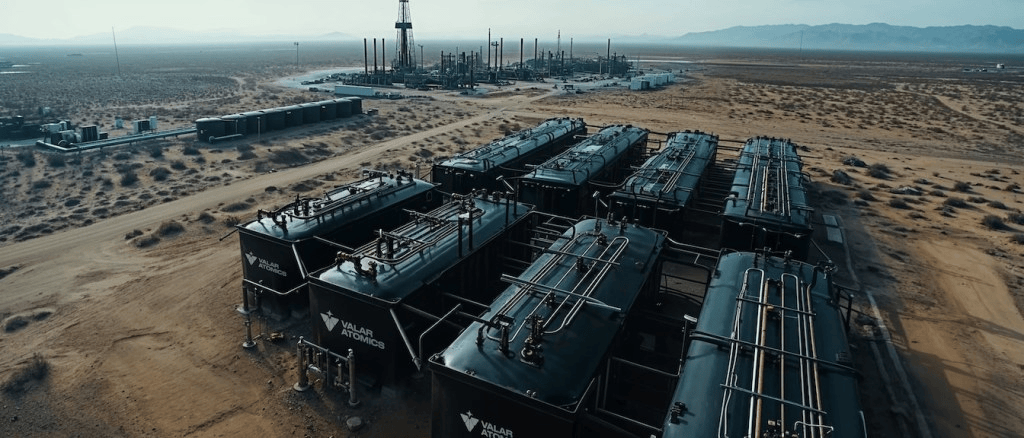
Valar Atomics Targets $6 Billion Valuation as AI-Powered Nuclear Energy Race Accelerates
The race to power America’s artificial intelligence boom is fueling unprecedented investment in next-generation nuclear technology. Valar Atomics, a California-based nuclear startup developing small modular reactors (SMRs), is reportedly in discussions to raise a massive new funding round that could value the company at approximately $6 billion. The fundraising reflects growing investor confidence in advanced nuclear energy as technology giants search for reliable, carbon-free electricity to support expanding AI infrastructure and data centers. Valar Atomics Eyes Major Funding Round According to multiple reports, Valar Atomics is negotiating a $1 billion equity funding round, with venture capital giant Sequoia expected to lead the investment. While neither company has officially commented, the proposed valuation would represent a significant jump from earlier financing. Earlier this year, the startup secured approximately $450 million in funding, including $340 million in equity and $110 million in debt, at a valuation of around $2 billion. The latest fundraising demonstrates how quickly investor interest has grown in companies building the future of clean energy for AI-powered computing. The deal also highlights an emerging fundraising trend where startups raise capital in multiple stages at different valuations rather than completing a single financing round. Why AI Is Driving Nuclear Energy Investment Artificial intelligence is reshaping the global electricity market. Modern AI models require enormous computational resources, forcing technology companies to build larger and more powerful AI data centers. These facilities consume massive amounts of electricity, creating pressure on existing power grids across the United States. As utilities struggle to expand electricity generation fast enough, advanced nuclear power has emerged as one of the most promising long-term energy solutions. Unlike fossil fuels, small modular reactors can provide: These advantages make SMRs increasingly attractive for powering hyperscale AI infrastructure. Nvidia Partnership Strengthens Valar’s Position Valar Atomics recently demonstrated a proof of concept by using its nuclear reactor to provide electricity to an Nvidia AI chip. The company also announced a collaboration with Nvidia to explore how advanced nuclear reactors could supply energy for future AI data centers. The partnership represents a growing trend where semiconductor companies and energy innovators work together to solve one of AI’s biggest challenges: reliable electricity. As demand for AI computing continues to rise, energy availability is becoming just as important as access to advanced chips. What Makes Valar Atomics Different? Valar is developing a helium-cooled, high-temperature gas reactor, an advanced reactor design intended to improve efficiency and safety compared to traditional nuclear plants. Rather than constructing massive nuclear facilities that often take more than a decade to complete, the company plans to manufacture small modular reactors that can be produced in factories and deployed more rapidly. Its long-term vision includes building hundreds of SMRs capable of supplying electricity directly to AI data centers and industrial customers across the United States. Although the concept promises lower construction costs and faster deployment, commercial-scale implementation remains years away. Competition in the Advanced Nuclear Market Valar Atomics is entering an increasingly competitive industry where several companies are racing to commercialize advanced reactor technology. Major competitors include: With AI companies investing billions into computing infrastructure, nuclear startups are positioning themselves as critical partners in America’s future energy ecosystem. Regulatory Challenges Remain Despite investor enthusiasm, advanced nuclear companies continue to face significant regulatory hurdles. Valar previously joined several startups and U.S. states in challenging the Nuclear Regulatory Commission (NRC), arguing that experimental small reactors should not face the same lengthy licensing process as traditional commercial nuclear plants. The legal dispute remains unresolved, though repeated pauses in litigation suggest ongoing discussions between regulators and industry participants. Industry experts believe streamlined regulations could accelerate deployment while maintaining strict safety standards. Founder Brings Unconventional Background Valar Atomics was founded by Isaiah Taylor, a technology entrepreneur who left high school at age 16 to pursue startups. Now 27, Taylor has previously launched multiple companies before entering the nuclear energy sector. He has also highlighted his family’s scientific legacy, noting that his great-grandfather worked as a nuclear physicist on the historic Manhattan Project. His unconventional path reflects the growing intersection of Silicon Valley entrepreneurship and advanced energy innovation. What This Means for the Future of AI Infrastructure The proposed $6 billion valuation underscores how rapidly nuclear energy is becoming part of the AI investment narrative. As demand for cloud computing, generative AI, machine learning, and high-performance computing continues to surge, stable electricity generation is becoming a strategic priority for technology companies. If Valar Atomics successfully commercializes its reactor technology, it could help address one of the biggest obstacles facing AI expansion—delivering reliable, scalable, and carbon-free power for next-generation data centers. While commercial deployment of SMRs will require years of engineering, regulatory approvals, and construction, investors appear increasingly confident that advanced nuclear energy could play a central role in supporting America’s AI-driven future. The source of this news is From Tech Crunch.
Valar Atomics Targets $6 Billion Valuation as AI-Powered Nuclear Energy Race Accelerates Read More »