

Data News

Amazon-Ends-Data-Center

Amazon Drops NDAs on Data Center Deals: Will Transparency Win Back Skeptical Communities?

Few tech projects are more controversial right now than AI data centers. Communities across the U.S. are pushing back, and one big reason is secrecy. Now Amazon says it will stop signing nondisclosure agreements (NDAs) with local governments, following a similar move from Microsoft earlier this year. Quick Facts Why NDAs Became a Problem NDAs let companies keep project details private during negotiations. For data centers, that often meant residents didn’t know what was coming to their town until deals were nearly done. TechCrunch notes that this secrecy has fueled community backlash against AI infrastructure, which has translated into moratorium efforts across the country. What Amazon and Microsoft Are Changing By dropping NDAs, both companies are promising more open conversations with city and county officials. Local leaders could share information with residents earlier, which gives communities a chance to weigh in before decisions are made. The hosts of Equity discuss whether this shift will actually change how data center deals get done. Is Transparency Enough? Dropping NDAs addresses secrecy, but it doesn’t settle every complaint about data centers. Residents often raise concerns about power use, water, noise, local jobs and tax breaks. Openness is a start, yet trust usually depends on how companies respond once the details are public. That open question is the core of the podcast’s discussion. Trust Is Also the Product for AI Agent Startups The same episode ties trust to another corner of tech. A wave of startups is betting that consumers will give AI agents access to their inboxes, files and credit cards. TechCrunch reports that these startups first need websites to let their agents in. Whether people hand over that kind of access depends on how much they trust the companies behind the tools. What It Means for Communities What It Means for Tech Companies Hyperscalers need new data centers to meet AI demand, so local approval matters more than ever. Opening up about negotiations could reduce friction, but only if communities believe the openness is real. What to Watch Next Source: TechCrunch

Amazon Drops NDAs on Data Center Deals: Will Transparency Win Back Skeptical Communities? Read More »

, , , , , , , , , ,
Upwind raises $400M

Upwind Rejects Datadog’s Offer and Raises $400M at a $3.8B Valuation

Most startups jump at a $3.8 billion buyout. Upwind chose to stay independent. The AI-driven cloud security company has raised a $400 million Series C round at that same valuation after passing on an acquisition offer from Datadog, according to TechCrunch. Quick Facts Why Upwind Said No to Datadog TechCrunch reports, citing a person familiar with Upwind, that Datadog tried to acquire the company. Datadog is a public company that sells software for monitoring how applications run. According to that source, Datadog’s offer carried no premium over the $3.8 billion valuation that venture investors had already set, so Upwind decided to keep going on its own. Datadog and Upwind haven’t commented publicly. TechCrunch says it reached out to both. A Fast Climb in Valuation The new round arrives just nine months after Upwind raised $250 million at a $1.5 billion valuation, which means the company’s valuation has more than doubled in under a year. The funding had been in the works for months and nearly collapsed after the Datadog approach. The Numbers Behind the Hype Upwind is four years old and growing quickly. A person familiar with the company’s financials told TechCrunch it adds $20 million to $30 million in annualized recurring revenue (ARR) every quarter and is projected to end the year near $90 million. That puts the valuation above 40 times forecast ARR, a common yardstick for software companies. It’s still well below the roughly 80 times ARR that investors assigned to cybersecurity startup Cyera earlier this year, according to TechCrunch’s earlier reporting. What Upwind Actually Does Upwind builds what it calls “runtime” security for cloud systems. That means it detects, alerts on and fixes attacks and vulnerabilities in services that are actively running, in real time, rather than only scanning code or configurations beforehand. The company uses AI to do this as threats grow more sophisticated. The Founder’s Track Record Founder Amiram Shachar has done this before. He previously sold his cloud cost management startup, Spot.io, to NetApp for $450 million. Is Cybersecurity the Next AI Wave? TechCrunch points to an argument from Theory Ventures general partner Tomasz Tunguz, who has written that cybersecurity could be the third big wave of AI software companies pay for, after coding tools and customer support. Upwind’s valuation jump reflects investor appetite for that thesis. What Comes Next Turning down a deal signals confidence that the company will be worth more later. But TechCrunch notes that few cybersecurity companies have gone public in recent years, so an eventual sale remains the most likely outcome. According to the same source, Upwind is still attracting acquisition interest. What to Watch Next Source: TechCrunch

Upwind Rejects Datadog’s Offer and Raises $400M at a $3.8B Valuation Read More »

, , , , , , , , , ,
databricks

Databricks Co-Founder’s Playbook: How Startups Land Big Enterprise Customers

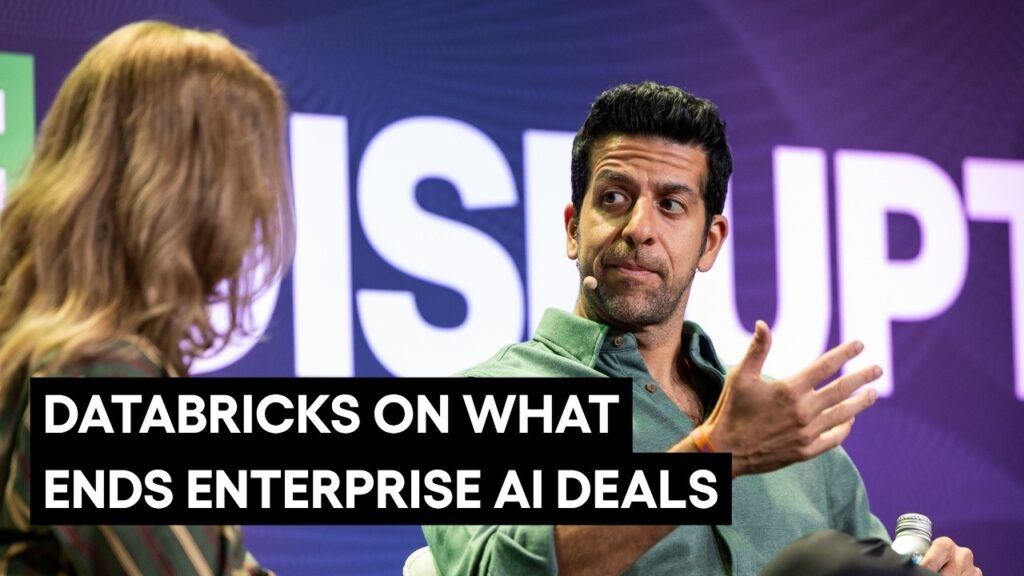
Great technology won’t close an enterprise deal on its own. That’s the hard lesson from Arsalan Tavakoli-Shiraji, co-founder and senior vice president of field engineering at Databricks, who shared his sales playbook at TechCrunch Disrupt. Quick Facts Why Great Tech Isn’t Enough Young startups often assume a superior product will sell itself. Tavakoli-Shiraji says he learned otherwise while landing Databricks’ first big deals. Early on, he once landed a meeting with a prospect who had already staked his career on a rival’s mega-contract, so he had no reason to listen. Other early deals fell apart because the startup wasn’t ready for legal, contract and security questions. Enterprise buyers expect answers to all three before they sign. Tip 1: Sell Under a Bigger Company’s Umbrella Databricks tried and failed to get a meeting with Swiss bank UBS. Then it became an Azure cloud partner with Microsoft. That meant deals could run under Microsoft’s terms, and Microsoft’s sales team booked meetings and advocated for the startup. Suddenly, meetings that had been hard to get became easy. Tavakoli-Shiraji said the startup started “getting pulled everywhere,” which created new problems, like prospects asking for features in countries Databricks hadn’t entered yet. Those were good problems to have. Today, Databricks plays the same role for startups. It sells their products under its own terms and security setup. Examples include Hightouch, Addepar and Tecton, which Databricks later acquired. Tip 2: Answer the “Four C’s” When Selling AI Tavakoli-Shiraji groups enterprise objections about AI into four categories: Address all four early, and you remove the biggest sources of buyer hesitation. Tip 3: Go After Expensive Legacy Systems Tavakoli-Shiraji asks CIOs to rate their AI progress from one to five. A one means staff merely have access to ChatGPT. A five means AI has reshaped business processes. Nearly everyone claims “three leaning toward four,” but he says 99% of the leaders he talks to sit in the one-or-two range. He believes real enterprise AI adoption will take many years. In the meantime, he sees a big opening in legacy tech. Banks still run IBM AS/400s and mainframes that nobody wants to touch because nobody knows what the code does. AI agents can now analyze and break down that code, which creates openings for startups to modernize interfaces or replace the systems entirely. Takeaways for Founders What to Watch Next Expect more startups to pursue partner-led sales and legacy-modernization products as AI agents mature. TechCrunch’s full interview also covers Tavakoli-Shiraji’s predictions for enterprise AI, plus a story about posing as a lawyer to land a deal. Source: TechCrunch

Databricks Co-Founder’s Playbook: How Startups Land Big Enterprise Customers Read More »

, , , , , , , , , , ,